Biomedical Sciences (BMS) Graduate Program
Admissions | Academic Program | Faculty | Events | Campuses & Facilities | The Bay Area | BMS Intranet | Students | Home
BMS Research Areas
back to
BMS Faculty Directory
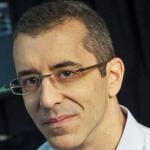
Scott Kogan, MD
Cooperating Events in Leukemogenesis and Their Reversal
Selected Publications | Complete Publications


  • The broad long-term objective of work in the Kogan laboratory is to understand the pathogenesis of acute leukemias and to apply this understanding to extend survival for patients with leukemias and other malignancies.
  • Our scientific focus is to comprehend the alterations in cell fate decisions that govern the transformation of normal hematopoietic cells into acute myeloid or acute lymphoid leukemia.
  • We work to (i) identify molecular changes that contribute to leukemia, (ii) delineate how genetic changes combine at the cellular and molecular levels to cause transformation and (iii) develop improved treatments using molecularly targeted therapeutics.

One major area of study is acute promyelocytic leukemia (APL). The recurrent chromosomal translocation, t(15;17)(q22;q12), is characteristic of APL. This translocation fuses the retinoic acid receptor alpha gene (RARA), a member of the nuclear steroid-thyroid hormone receptor superfamily, with the gene encoding PML, a nuclear protein that regulates cell growth and survival. Remarkably, all-trans retinoic acid, a ligand for RARα, can induce remission in patients with the PML/RARα fusion by stimulating the leukemic cells to differentiate into mature neutrophils. APL has become the most curable of the myeloid leukemias, and therefore may provide key information for developing effective treatments for other types of AML. We use a mouse model of APL for many of our studies.
Specific Projects:

  • identifying mechanisms by which PML-RARα contributes to leukemia and response to ATRA therapy
  • characterizing the myeloid cells that serve as leukemic stem cells in APL and using RNAi screening to identify mechanisms by which the proliferative potential of these cells is expanded, and
  • illuminating how two common genetic changes in human APL, activation of the FLT3 receptor tyrosine kinase and gain of chromosome 8, cooperate with PML-RARα in leukemic transformation.

A related area of study is overcoming chemotherapy resistance in AML. Overcoming intrinsic or acquired resistance to chemotherapy is a goal of great clinical import. We are utilizing animal models to develop therapeutic regimens that combine traditional cytotoxic agents with molecularly-targeted agents. These models are used to assess efficacy and mechanism.

An additional area of investigation is in mouse models of acute lymphoblastic leukemia (pre-B ALL). There are significant gaps in the availability of mouse models of pre-B ALL. Although 25% of pediatric pre-B ALL contains a t(12;21) translocation resulting in a fusion of two transcription factors, TEL-AML1, attempts to establish a mouse model of TEL-AML1 induced pre-B ALL initially met with limited success. There has been recent progress in developing mouse models of pediatric pre-B ALL. We are working to develop and utilize these mouse pediatric pre-B ALL models. In particular, we will investigate how environmental influences (carcinogens, nutrition, infections) can protect from or accelerate the onset of disease in these animal models.

An area of ongoing interest is the characterization of hematopoiesis and neoplasia in genetically engineered mice. Dr. Kogan and his laboratory contribute to research projects of investigators locally, nationally, and internationally.


Selected Publications

KoganSC; Doherty M; Gitschier J.  An Improved Method for Prenatal Diagnosis of Genetic Diseases by Analysis of Amplified DNA Sequences:  Application to Hemophilia A.  N Engl J Med 1987, 317:985-990.

Brown, DE*; Kogan, SC*; Lagasse, E; Weissman, IL; Alcalay, M; Pelicci, P; Atwater, S; Bishop, JM.  A PML-RARATransgene Initiates Murine Acute Promyelocytic Leukemia.  Proc Natl Acad Sci USA 1997, 94:2551-2556. 
*These authors contributed equally to this work.

Kogan, SC; Ward, JM; Anver, MR; Berman, JJ; Brayton, C; Cardiff, RD; Carter, JS; de Coronado, S; Downing, JR; Fredrickson, TN; Haines, DC; Harris, AW; Harris, NL; Hiai, H; Jaffe, ES; MacLennan, ICM; Pandolfi, PP; Pattengale, PK; Perkins, AS; Simpson, RM; Tuttle, MS; Wong, JF; Morse, HC III.  Bethesda Proposals for Classification of Non-Lymphoid Hematopoietic Neoplasms in Mice.  Blood 2002, 100:238-245

Truong, BH; Lee, YJ; Lodie, TA; Park, DJ; Perrotti, D; Watanabe, N; Koeffler, HP; Nakajima, H; Tenen, DG; Kogan, SC.  CCAAT/Enhancer Binding Proteins Repress the Leukemic Phenotype of Acute Myeloid Leukemia.  Blood, 2003, 101:1141-1148.

Sohal, J; Phan, VT; Chan, PV; Davis, EM; Patel, B; Kelly, LM; Abrams, T; O’Farrell, AM; Gilliland, DG; LeBeau, MM; Kogan, SC.  A model of APL with FLT3 mutation is responsive to retinoic acid and a receptor tyrosine kinase inhibitor, SU11657.  Blood, 2003, 101: 3188-3197.

Phan, VT; Shultz, DB; Truong, BH; Blake, TJ; Brown, AL; Gonda, TJ; Le Beau, MM; Kogan, SC.  Cooperation of Cytokine Signaling with Chimeric Transcription Factors in Leukemogenesis: PML-RARα blocks growth factor mediated differentiation.  Mol Cell Biol, 2003, 23: 4573-4585.

Le Beau, MM; Davis, EM; Patel, B; Phan, VT; Sohal, J; Kogan, SC.  Recurring Chromosomal Abnormalities in Leukemia in PML-RARA Transgenic Mice Identify Cooperating Events and Genetic Pathways to Acute Promyelocytic Leukemia.  Blood, 2003, 102:1072-1074.

Zhu, J; Zhou, J; Peres, L; Riacoux, F; Honoré, N; Kogan, S; de Thé, H.  A Sumolation site in PML/RARA is Essential for Leukemic Transformation.  Cancer Cell 2005, 7:143-153.

Sternsdorf, T; Phan, V; Maunakea, ML; Ocampo-Bayuga, C; Sohal, J; Silletto, A; Galimi, F; LeBeau, MM; Evans, RM; Kogan, SC. Forced Retinoic Acid Receptor alpha Homodimers Prime Mice for APL-like Leukemia. Cancer Cell, 2006, 9:81-94.

Lee, YJ; Jones, LC; Timchenko, NA; Perrotti, D; Tenen, DG; Kogan, SC. CCAAT/enhancer binding proteins alpha and epsilon cooperate with all-trans retinoic acid in therapy but they differ in their anti-leukemic activities. Blood, 2006, 108:2416-1249.

Forsberg, C; Serwold, T; Kogan, S; Weissman, IL; Passegué, E. New evidence supporting megakaryocyte-erythrocyte potential of flk2/flt3(+) multipotent hematopoietic progenitors. Cell, 2006, 126:415-426.

Wendel, HG; Malina, A; Zhao, Z; Zender, L; Kogan, SC; Cordon-Cardo, C; Pelletier, J; Lowe, SW. Determinants of sensitivity and resistance to rapamycin-chemotherapy drug combinations in vivo. Cancer Research, 2006, 66:7639-7646.

Lee, BD; Sevcikova, S; KoganSC. Dual treatment with FLT3 inhibitor SU11657 and doxorubicin increases survival of leukemic mice. Leukemia Research, 2007, 31:1139-1142.

Omidvar, N; Kogan, S; Beurlet, S; le Pogam, C; Janin, A; West, R; Noguera, ME; Reboul, M; Soulie, A; Leboeuf, C; Setterblad, N; Felsher, D; Lagasse, E; Mohamedali, A; Thomas, NSB; Fenaux, P; Fontenay, M; Pla, M; Mufti, GJ; Weissman, I; Chomienne, C; Padua, RA. BCL-2 and mutant NRAS interact physically and functionally in a mouse model of progressive myelodysplasia. Cancer Research, 2007, 67:11657-11667.

Mills, J; Hippo, Y; Robert, F; Chen, SM; Malina, A; Lin, CJ; Trojahn, U; Wendel, HG; Charest, A; Bronson, RT, Kogan, SC; Nadon, R; Housman, DE; Lowe, SW; Pelletier, J. mTORC1 promotes survival through translational control of Mcl-1. Proceedings of the National Academy of Sciences U S A , 2008, 105:10853-10858.

Viatour, P; Somervaille, TC; Venkatasubrahmanyam, S; Kogan, S; McLaughlin, ME; Weissman, IL; Butte, AJ; Passegué, E; Sage, J. Hematopoietic stem cell quiescence is maintained by compound contributions of the retinoblastoma gene family. Cell Stem Cell, 2008, In Press.

information last updated September 2008
Featured Paper
Kogan Lab
Forced retinoic acid receptor a homodimers prime mice for APL-likeleukemia
Cancer Cell 9, 81–94, February 2006
download paper
Lab Members
Lab Addresses
Mailing Address:
c/o Scott Kogan
Box 0100, Room S-864
513 Parnassus Ave.
San Francisco, CA 94143-0100
 
Shipping Address:
Kogan Laboratory
513 Parnassus Ave, Room S-864
San Francisco, CA 94143

© 2008 The Regents of the University of California. All rights reserved.
Image Credits